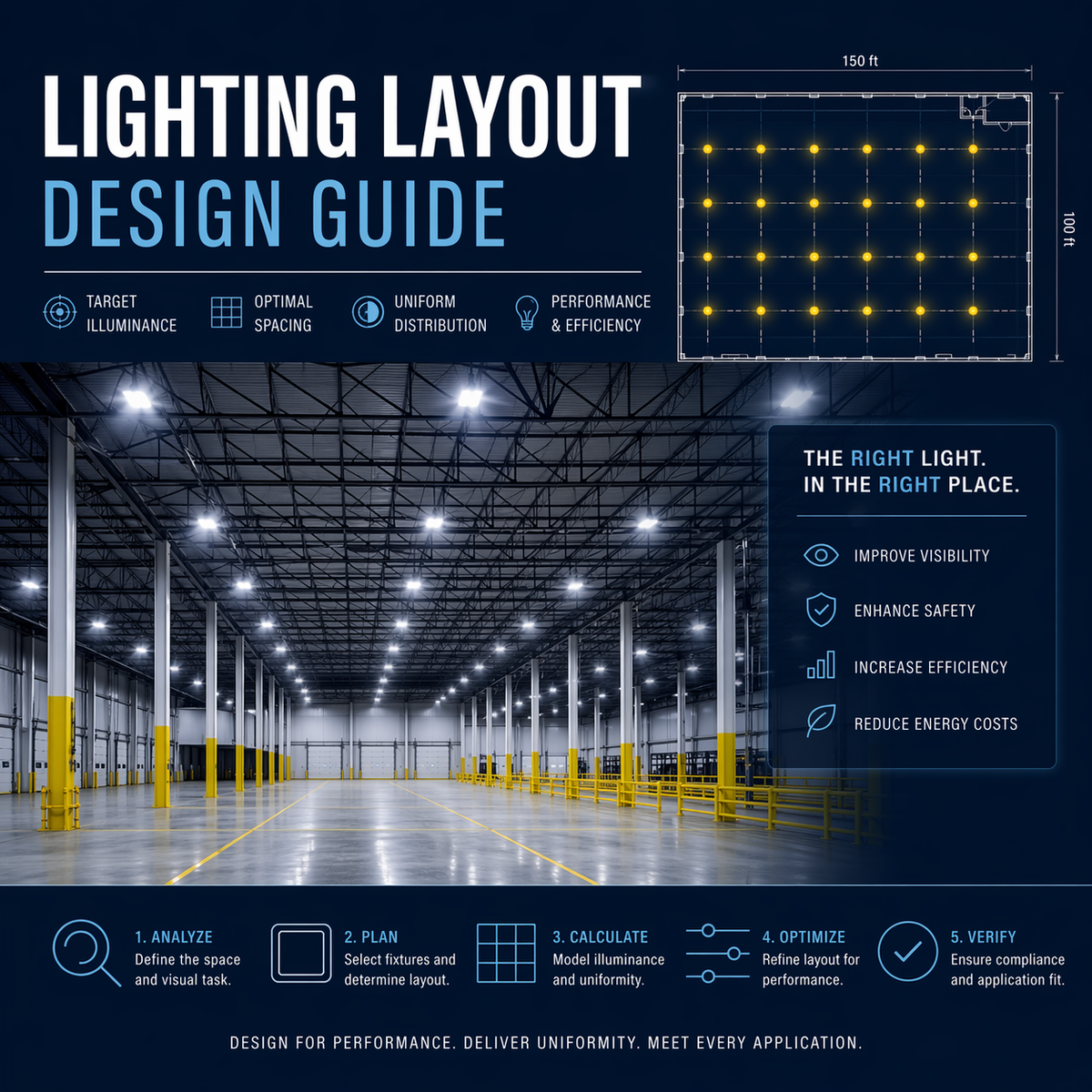
T8 LED tube lighting installed in a large commercial warehouse with high ceilings, organized shelving aisles, and evenly illuminated work areas

T8 LED Bulbs

T8 LED tubes for fluorescent retrofits—linear lamps specified by ballast strategy and maintenance planning.

Filter

    T8 LED bulbs are linear retrofit lamps specified to convert fluorescent T8 luminaires to solid-state operation while retaining the existing fixture. Widely deployed across offices, educational facilities, parking structures, and commercial buildings, these lamps support stable electrical performance, reduced maintenance exposure, and standardized lighting layouts compared to legacy fluorescent systems.

    This collection includes T8 retrofit lamps evaluated based on ballast strategy, input voltage, lumen package, base configuration, thermal limits, and compatibility with existing wiring infrastructure. Options include Type A (ballast-compatible), Type B (ballast-bypass), and hybrid designs, allowing alignment with facility maintenance policy, electrical architecture, and long-term lifecycle planning.

    Shop T8 LED bulbs by length and lumen output—and choose Type A, Type B, or hybrid.

    5 products

    Technical FAQs for T8 LED Linear Retrofit Systems

    Engineering reference: Review our commercial ceiling lighting buying guide for retrofit methodology, ballast evaluation, electrical compatibility, and lumen planning commonly assessed when modernizing linear fluorescent infrastructure across commercial facilities.

    What defines a commercial T8 LED retrofit tube?

    A commercial T8 LED retrofit tube is engineered to modernize legacy fluorescent systems while maintaining compatibility with existing fixture architecture. Selection is typically guided by electrical configuration, ballast strategy, lumen requirements, and installation conditions.

    Where are T8 retrofit systems commonly deployed?

    T8 systems are frequently evaluated across offices, education facilities, healthcare environments, retail buildings, and other interiors operating linear fluorescent infrastructure.

    Why is ballast evaluation critical during retrofit planning?

    Ballast configuration determines how electrical power is delivered within the fixture. Verifying ballast condition and compatibility helps support predictable system behavior.

    What retrofit architectures are commonly assessed?

    Facilities typically evaluate ballast-compatible, ballast-bypass, or hybrid configurations depending on electrical conditions and maintenance strategy.

    When should a ballast be removed instead of retained?

    If the ballast is degraded, unstable, or approaching end-of-service life, bypassing the ballast may provide a more predictable electrical path.

    What electrical characteristics should be verified before installation?

    Branch voltage, wiring integrity, socket condition, circuit capacity, and switching behavior should be confirmed to support reliable operation.

    How does fixture condition influence retrofit decisions?

    Fixtures with structural degradation, compromised reflectors, or wiring concerns may warrant luminaire replacement instead of retrofit.

    When should a facility upgrade the entire luminaire rather than retrofit the tube?

    If fixture architecture is outdated or illumination targets cannot be maintained, upgrading the luminaire may provide a more stable long-term solution. Facilities often evaluate broader modernization within LED ceiling lights.

    Why is lumen planning important in linear retrofit projects?

    Proper lumen selection helps maintain illumination consistency across the workspace following modernization.

    How does mounting height influence lumen selection?

    As installation height increases, higher lumen output may be required to maintain target brightness at the working plane.

    What installation factors should be reviewed prior to deployment?

    Fixture condition, wiring configuration, ambient temperature, mounting height, and maintenance accessibility should be assessed before installation.

    How do organizations maintain illumination consistency across large retrofit projects?

    Standardizing tube specifications helps prevent noticeable variation between fixtures and supports visual continuity across the facility.

    What factors influence long-term serviceability of retrofit systems?

    Electrical stability, component accessibility, fixture construction, and environmental conditions influence maintenance planning.

    Why do facilities standardize linear tube specifications?

    Standardization helps simplify maintenance workflows while supporting operational continuity.

    When are linear retrofit systems typically evaluated?

    Linear retrofit systems are commonly assessed when facilities seek to modernize fluorescent infrastructure without altering fixture layout.

    How does linear modernization support commercial lighting infrastructure?

    Modernizing legacy systems helps maintain predictable illumination while aligning electrical behavior with current operational requirements.