NCLTG
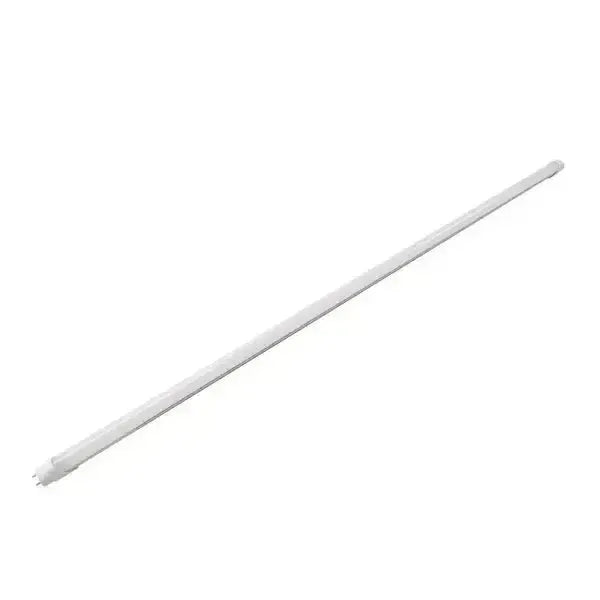
Linear5 Series T8 LED Tube
Linear5 Series T8 LED Tube
SKU:NC-T84F-M24W-CCT-AB
Couldn't load pickup availability
Product Details & Specifications
Product Details & Specifications
Product Overview
The Linear5 Series T8 LED Tube is engineered as a direct fluorescent replacement platform for commercial facilities transitioning legacy linear lighting systems to LED without changing fixture infrastructure. Designed for installation in existing strip lights, troffers, and industrial linear housings, the series supports both ballast-compatible and ballast-bypass operation, allowing retrofit strategies to align with maintenance planning, electrical standards, and long-term reliability requirements.
Selectable wattage enables lumen output to be matched to fixture spacing, ceiling height, and task illumination requirements while maintaining a consistent lamp format across large facilities. Field-selectable correlated color temperature allows visual uniformity between retrofit zones and newly installed luminaires, supporting coordinated deployment alongside LED linear tube lighting systems and broader commercial lighting installations.
Hybrid Type A+B compatibility provides installation flexibility during phased upgrades. Existing ballast operation can remain in service where appropriate, while direct-wire configuration removes ballast failure as a maintenance variable in long-term applications. LED tube technology delivers directional illumination with higher luminous efficacy and reduced operating heat compared to fluorescent sources, improving system efficiency while extending service intervals in continuously operated environments. LED tubes commonly achieve substantially longer operating life and lower power consumption than fluorescent lamps, reducing relamping frequency across commercial facilities operating extended hours.
The Linear5 platform standardizes 4-foot and 8-foot lamp deployment across warehouses, education facilities, retail interiors, service corridors, and industrial workspaces where linear illumination remains the dominant lighting architecture. Maintaining identical electrical characteristics, color temperature ranges, and installation options across lamp lengths simplifies specification, inventory management, and large-scale retrofit execution.
Fixture Specifications
- Input Voltage: 120–277V
- Compatibility: Type A+B (ballast compatible and ballast bypass)
- Wiring: Single- or double-ended wiring (by configuration)
- CCT Options: 3500K, 4000K, 5000K, 5700K, 6500K
- Efficacy: Up to 150 lm/W (126–150 lm/W across configurations)
- Dimming: 0–10V (when applicable to the installed configuration)
- Certifications: cETLus Listed, DLC Premium Listed
- Minimum Operating Temperature: -4°F
- Warranty: 5-Year Limited Warranty
Performance & Physical Configurations
8 ft
- Base: FA8
- Case Pack: Case of 25
- Input Voltage: 120–277V
- Selectable Wattage: 24W / 30W / 36W / 42W / 48W
- Lumen Output: 3,600 / 4,380 / 5,000 / 5,550 / 6,050 lm
- CCT Options: 3500K / 4000K / 5000K / 5700K / 6500K
- Dimensions: 92.78 in L × 1.29 in H × 1.13 in D
- MPN: NC-T88F-M48W-CCT-AB-FA8
- DLC Product ID: S-C0602B
4 ft
- Base: G13
- Case Pack: Case of 30
- Input Voltage: 120–277V
- Selectable Wattage: 10W / 12W / 15W / 18W / 24W
- Lumen Output: 1,500 / 1,750 / 2,100 / 2,430 / 3,050 lm
- CCT Options: 3500K / 4000K / 5000K / 5700K / 6500K
- Dimensions: 47.17 in L × 1.29 in H × 1.13 in D
- MPN: NC-T84F-M24W-CCT-AB
- DLC Product ID: S-FJ22Q1
Product Downloads
- Specification Sheet (NC-T84F-M24W-CCT-AB)
- Specification Sheet (NC-T88F-M48W-CCT-AB-FA8)
- Installation Instructions (NC-T84F-M24W-CCT-AB)
- Installation Instructions (NC-T88F-M48W-CCT-AB-FA8)
- Photometrics
- Warranty
Shop All: LED Commercial Lighting | LED Bulbs | LED Linear Tubes | LED HID Retrofit Bulbs | LED CFL Retrofit Bulbs
Shipping information
Shipping information
Shipping is calculated at checkout based on product type, destination, and delivery method (parcel or freight). For lead times, tracking, freight delivery, and inspection requirements, see our shipping policy.
Returns & Restocking
Returns & Restocking
Returns and restocking are handled through an authorization and routing process based on product type and manufacturer policy. Some returns may be subject to a manufacturer-determined restocking fee. For eligibility, steps, and correction handling, see our return and refund policy.
Share